Conflux 2025
Conflux is Amazon's flagship internal design conference — a multi-day gathering for 5,000+ designers. I served as lead designer and de facto creative director for the 2025 program: theme, visual system, and execution across every surface 1,600+ in-person attendees and 1,200+ streaming viewers would encounter.
January 2025 – October 2025
Brand Design
Creative Direction
Production
Context
Conflux is Amazon Design Excellence's (ADX) largest annual initiative — a multi-day internal conference connecting Amazon's global design community through thought leadership, professional development, and programming. I contributed to creative direction and led execution for the 2025 program. Amazon’s Cross-channel Marketing (XCM) brand team led brand development under ADX direction; commissioned artist Andreion De Castro's interpretive AI style defined the theme; and Funisok assisted with production design. This was Conflux's return to full in-person scale since pre-pandemic at Amazon's South Lake Union meeting center, and expectations from the design community reflected it. The timeline was compressed: a new program manager onboarded in February under new ADX leadership, and artwork approval cycles absorbed a significant share of the production window.
Opportunity
Three problems shaped the work:
Translation. Community input from a 5,000+ designer survey needed to become a theme capable of organizing a multi-day conference — content, speakers, and the story Conflux would tell about itself.
Execution gap. The theme was built around a commissioned artist whose dithering technique defined the visual language — but his tool couldn't be licensed at scale. Without a reproduction of that aesthetic, the theme would exist only in the pieces he delivered.
Scale of surface. Conflux 2025 lived across digital, environmental, motion, print, and international distribution — thirty-plus distinct surface types, all needing to read as the same event.
Process
Translating community input into a theme and framework
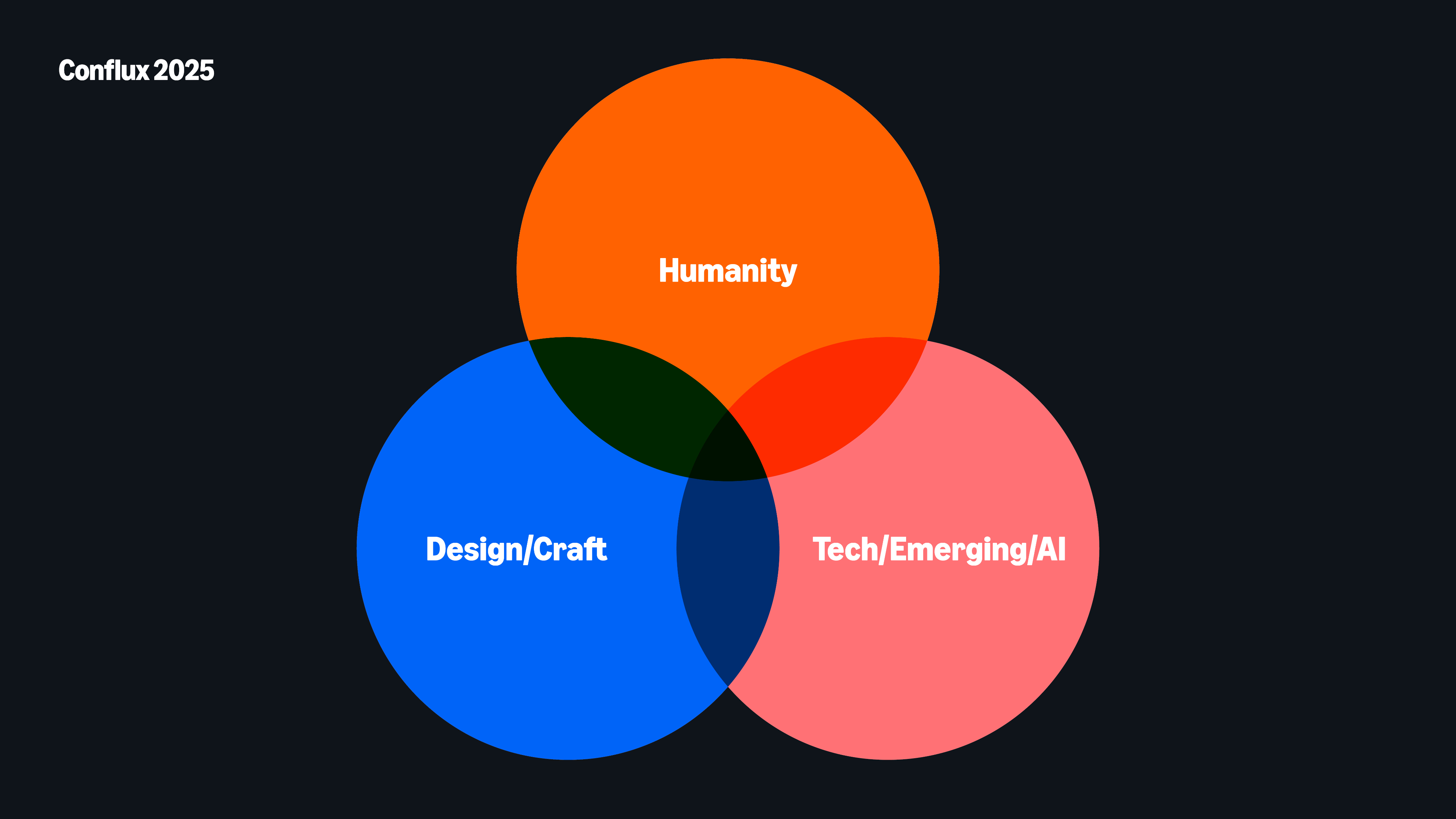
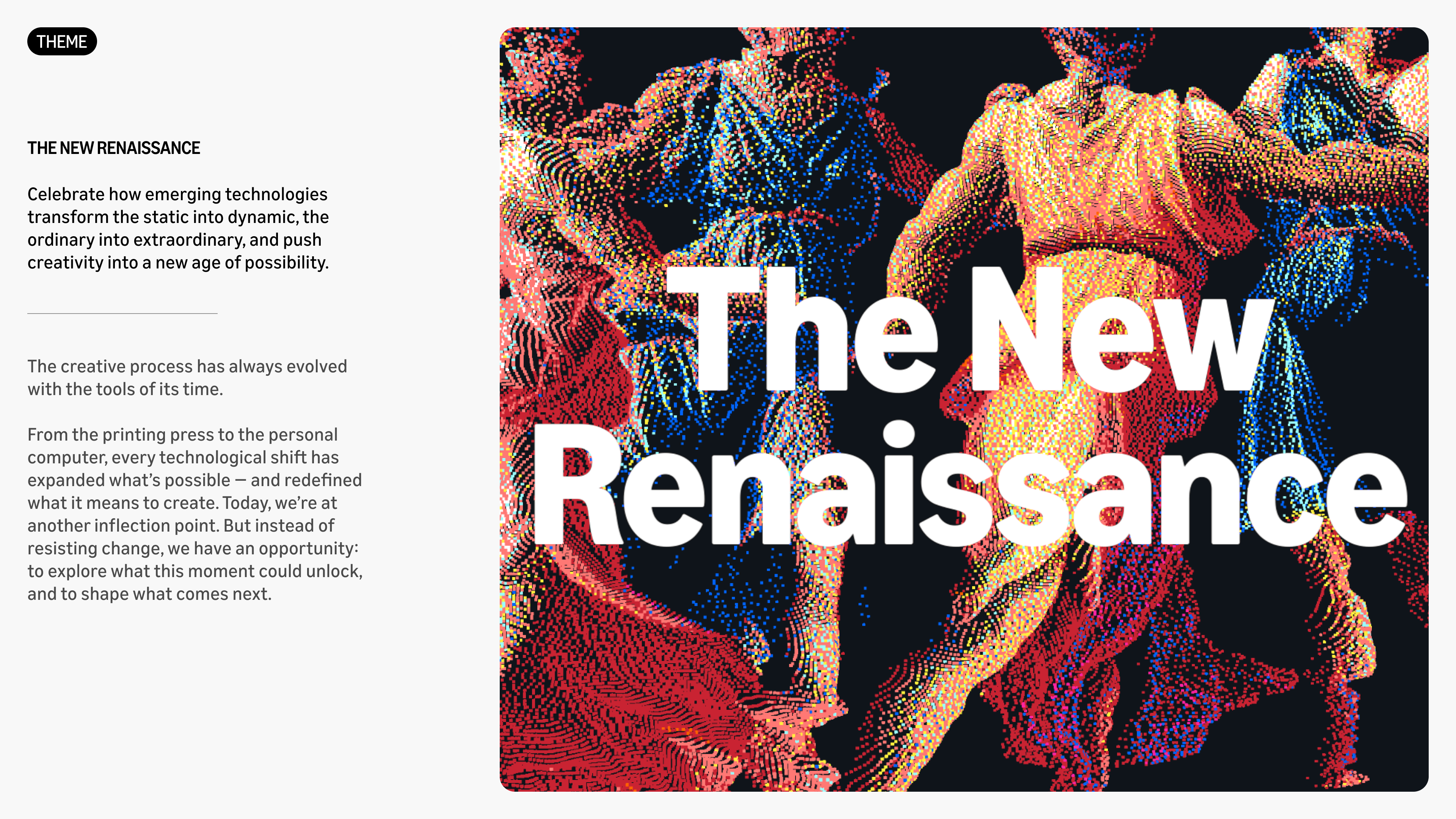
A community-wide survey of designers surfaced what was on people's minds and the results informed a clear directive from ADX leadership: create a theme that positioned designers as in control of the narrative around AI, and make it beautiful. Turning that into something a multi-day conference could be built around required a shape. Our team developed the three-subject framework: Humanity, Design/Craft, and Emerging Tech/AI. This framework organized programming, speaker selection, and the pitch to senior and VP stakeholders, and carried through into the brand system XCM developed around it.
Recreating the dithering technique
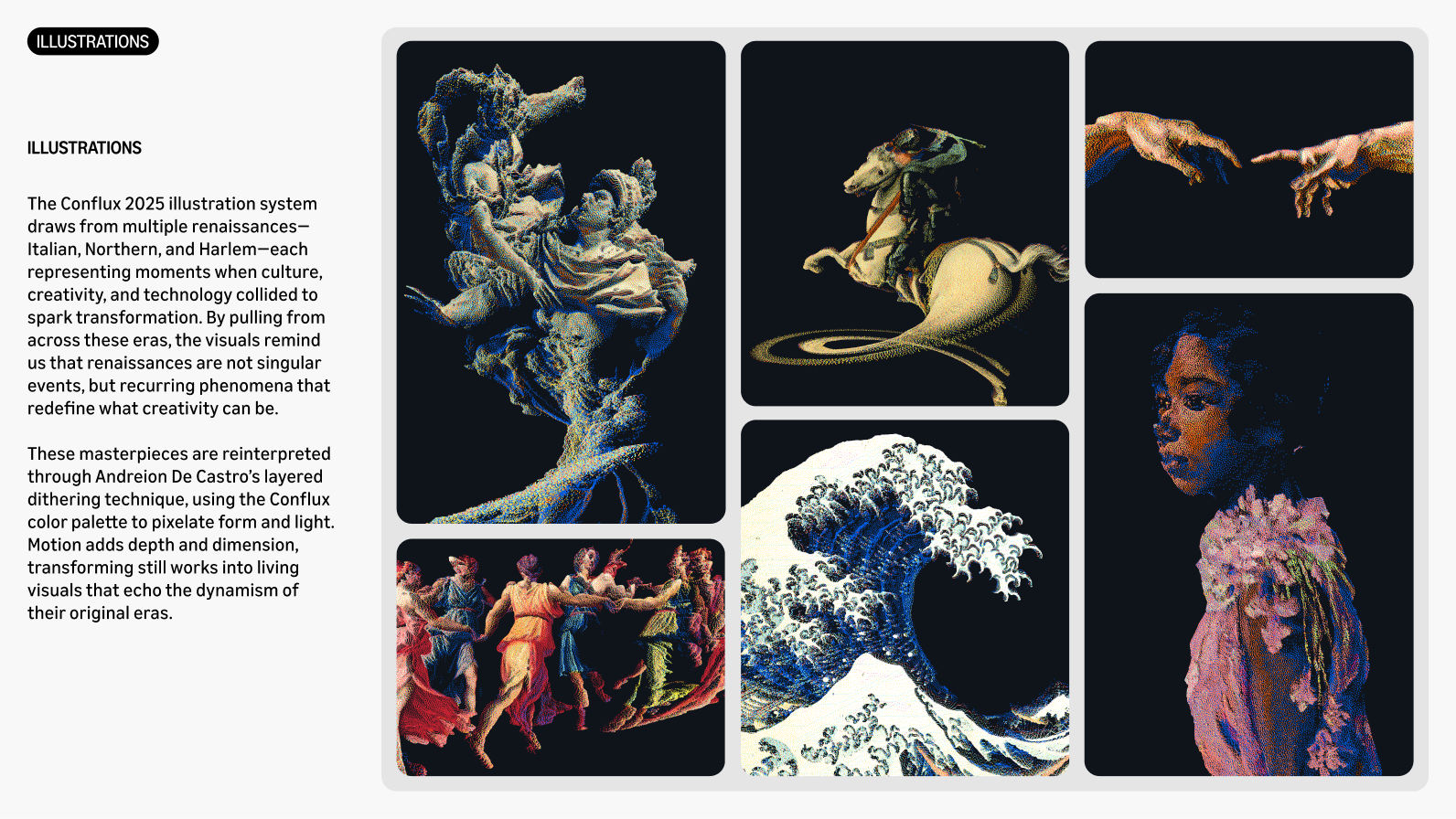
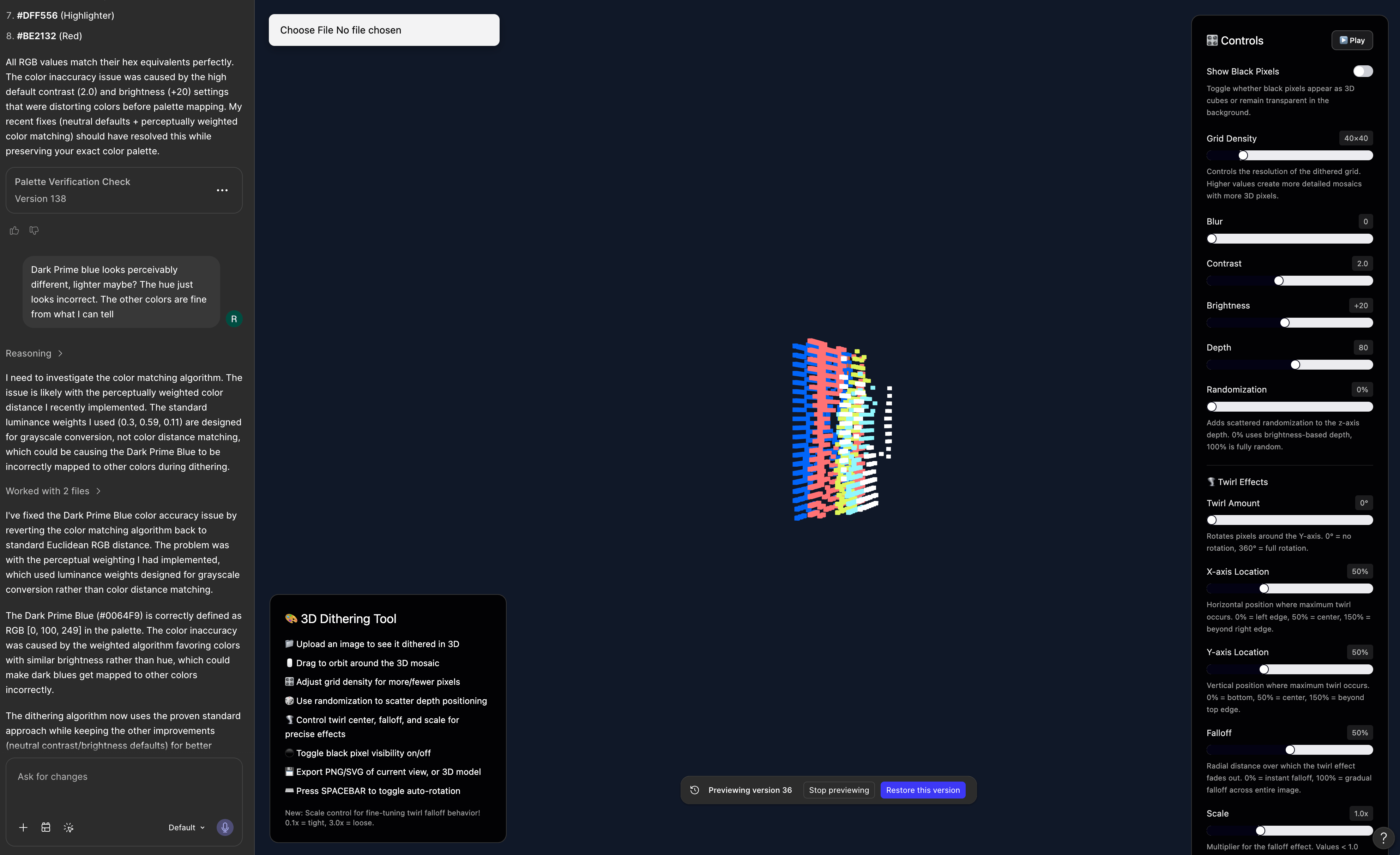
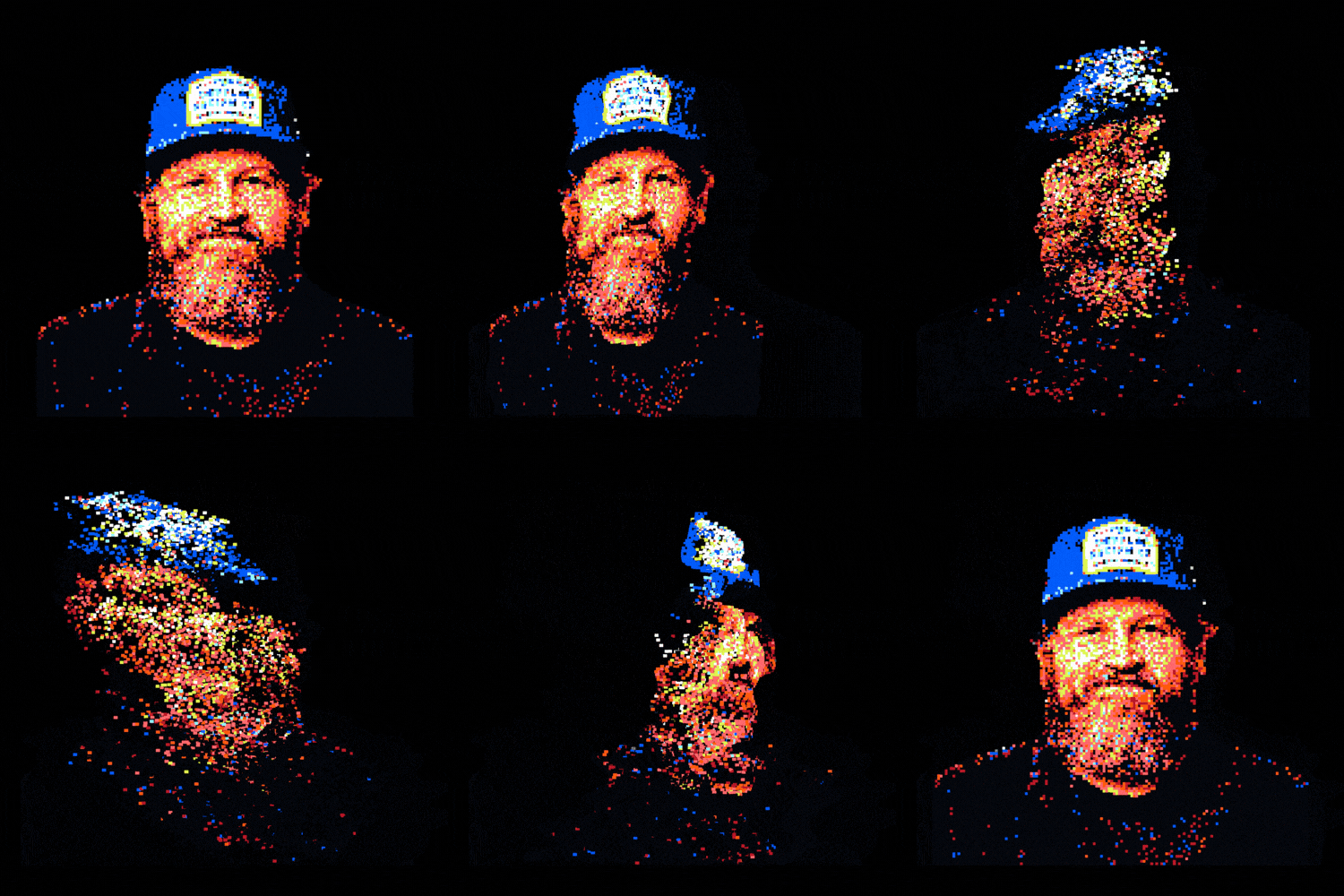
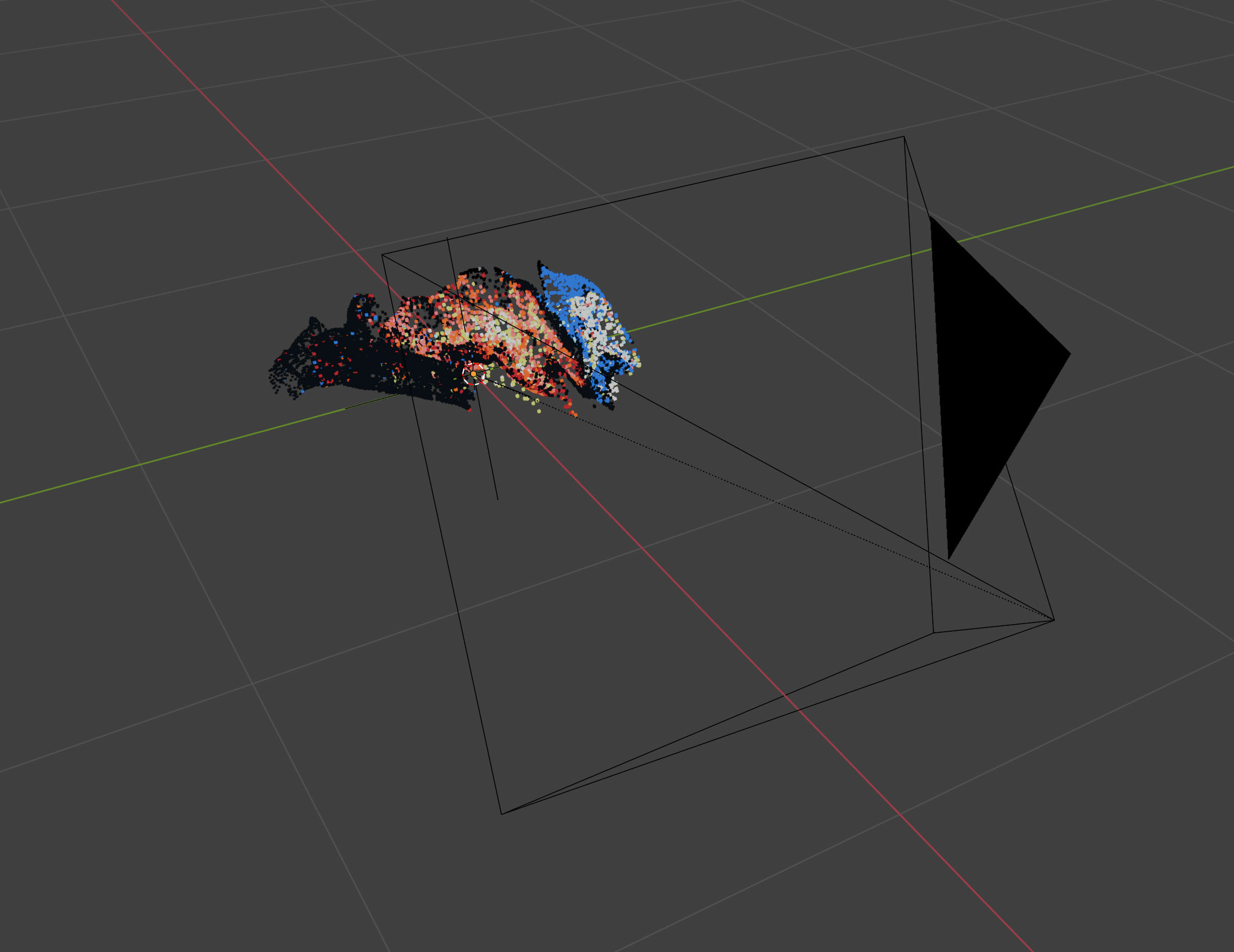
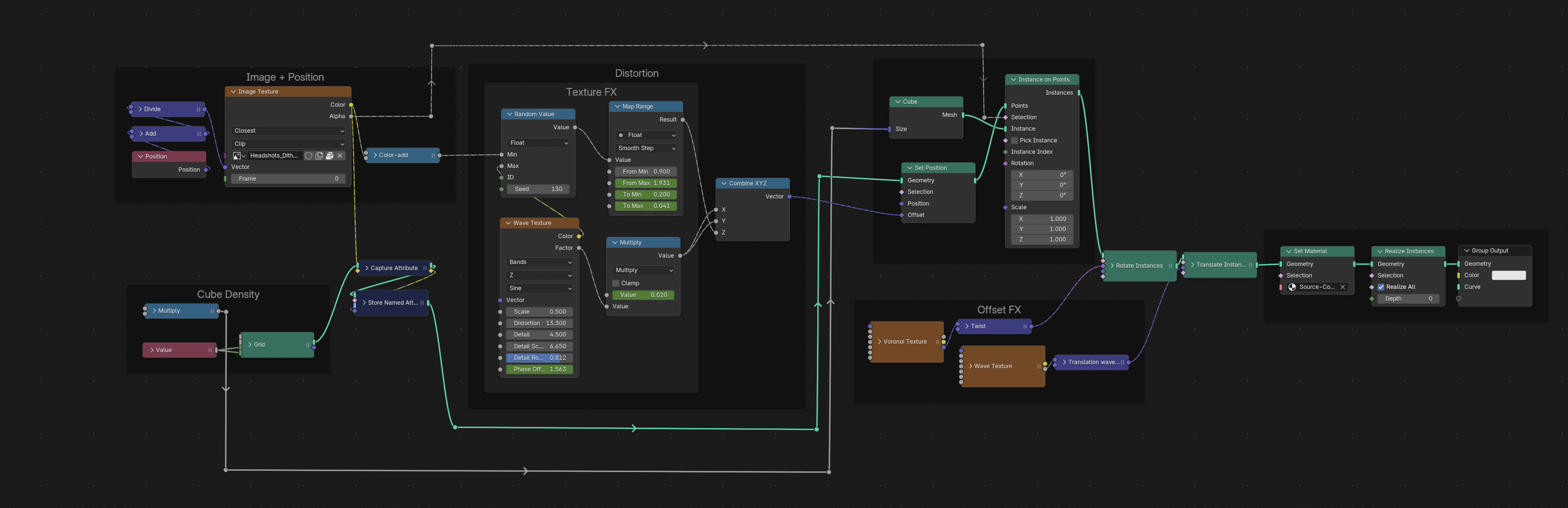
Andreion's dithering aesthetic was the theme's visual language, but licensing his tool at scale wasn't in the budget. I recreated the effect in Blender using geometry nodes and Python scripts, then built a Figma Make tool that applied the treatment to any input image. The recreation drove keynote speaker portraits, introduction cards, and stage graphics — and helped an external motion partner develop their direction for the conference intro. A production constraint became infrastructure that extended the theme across the event.
Leading execution across surfaces and teams
With the framework set and the dithering infrastructure in place, the work shifted to thirty-plus surface types — digital, environmental, print, motion, swag, and international watch party kits. Art direction ran simultaneously across ADX, XCM, Funisok, and external motion partners. The goal across all of it: every surface reading as the same event.
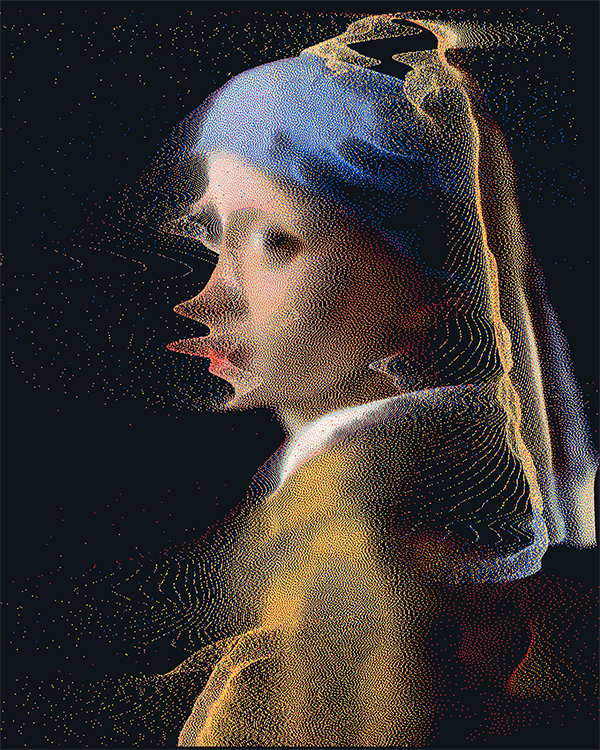
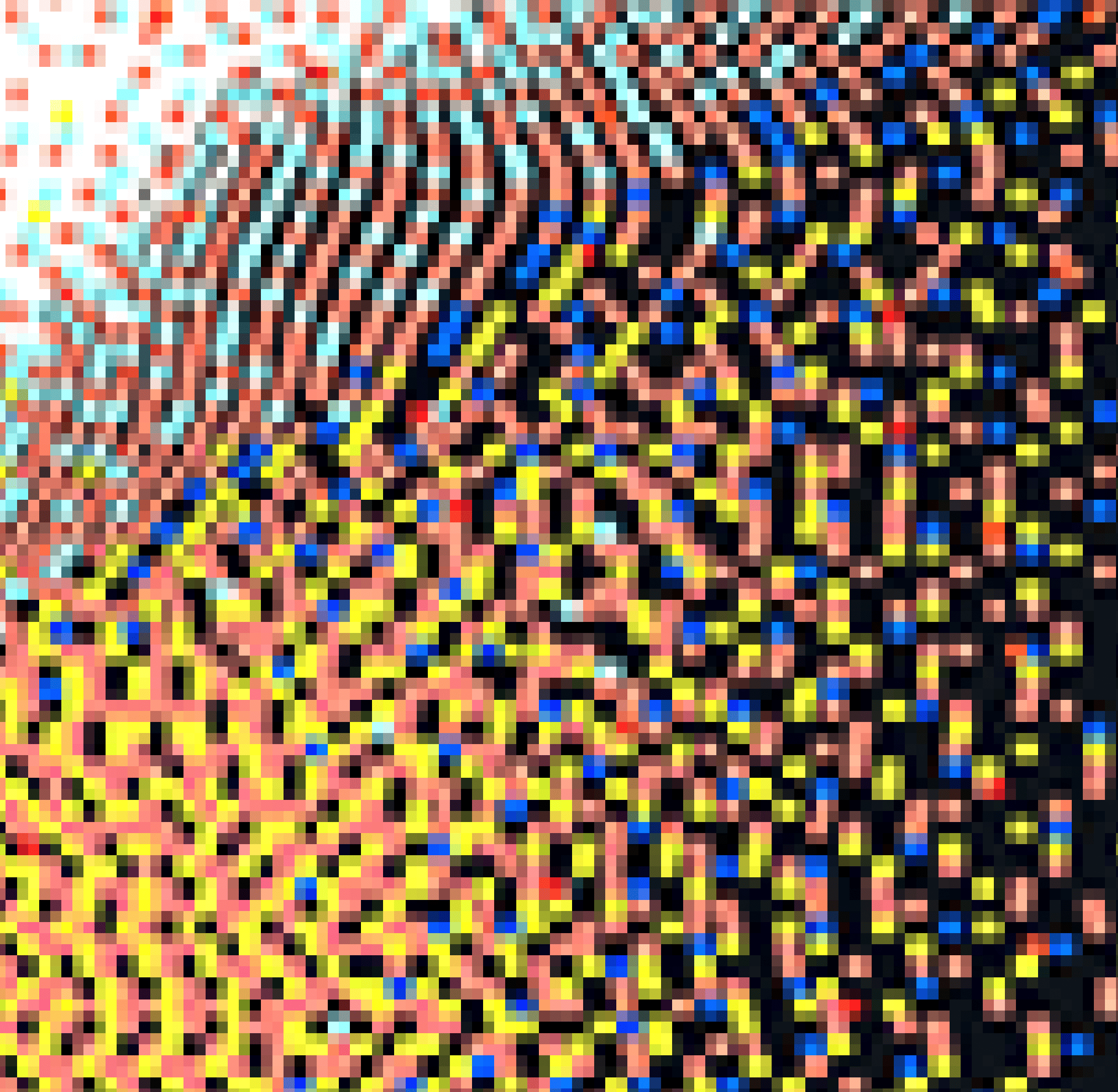
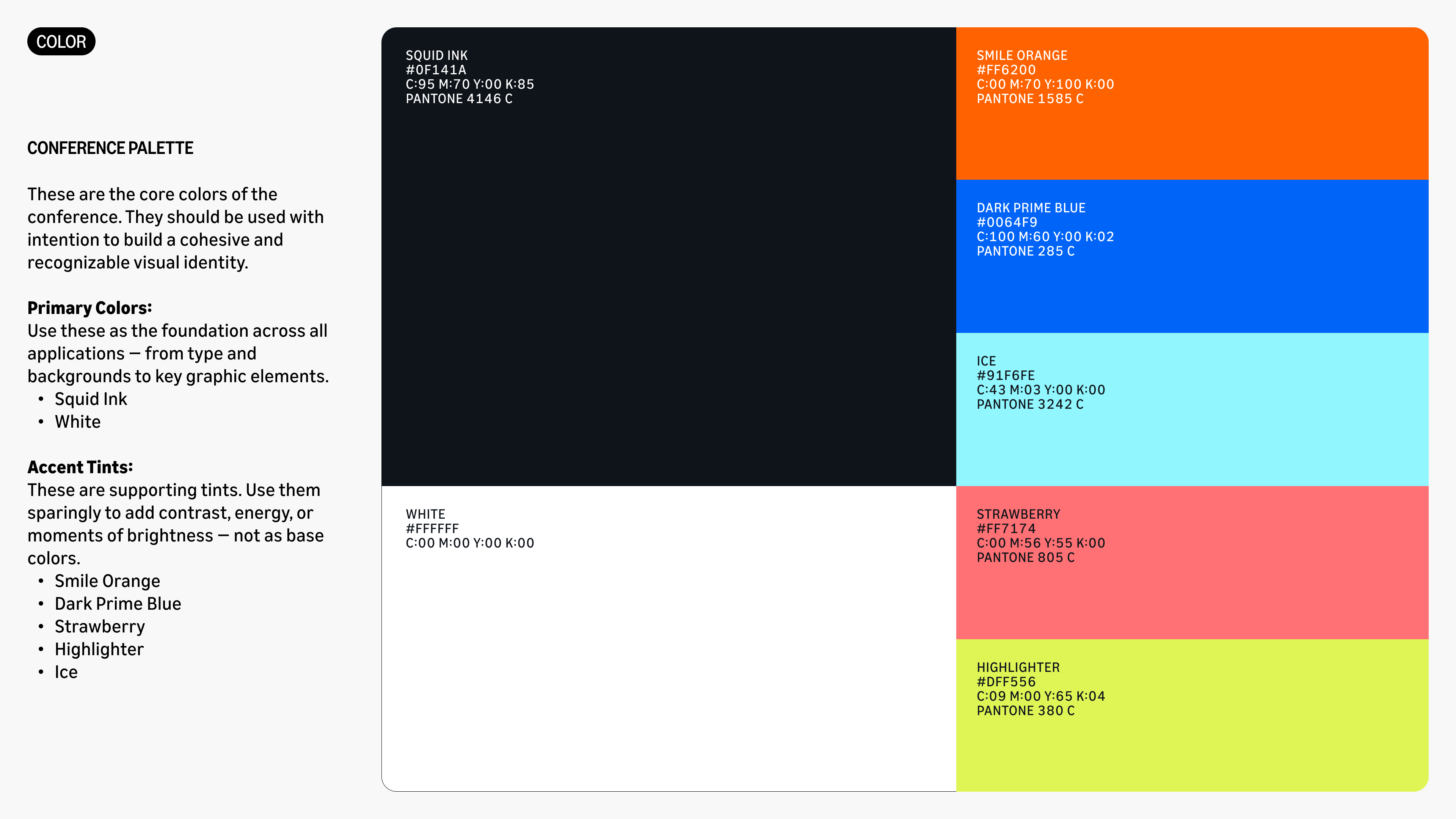
Final artwork was delivered as high resolution RGB png images. Each work was processed to account for perceived color across a variety of surfaces, including a reinterpretation of the anti-aliased pixels pictured above.
The Work
The work spans the full arc of Conflux 2025. Every surface was designed or art-directed to read as a single coherent event.
Digital Experience
Promotional video for internal lead-up marketing.
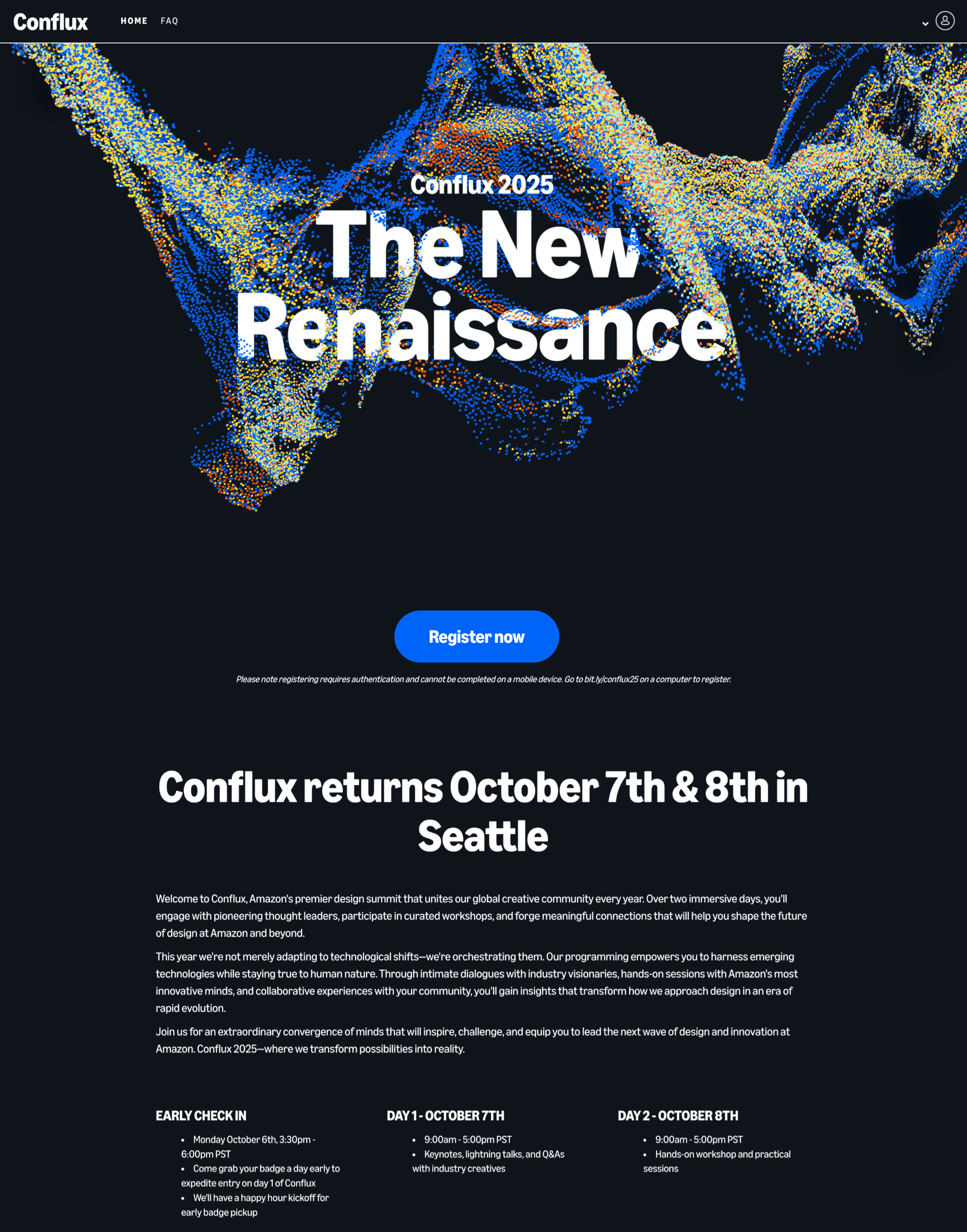
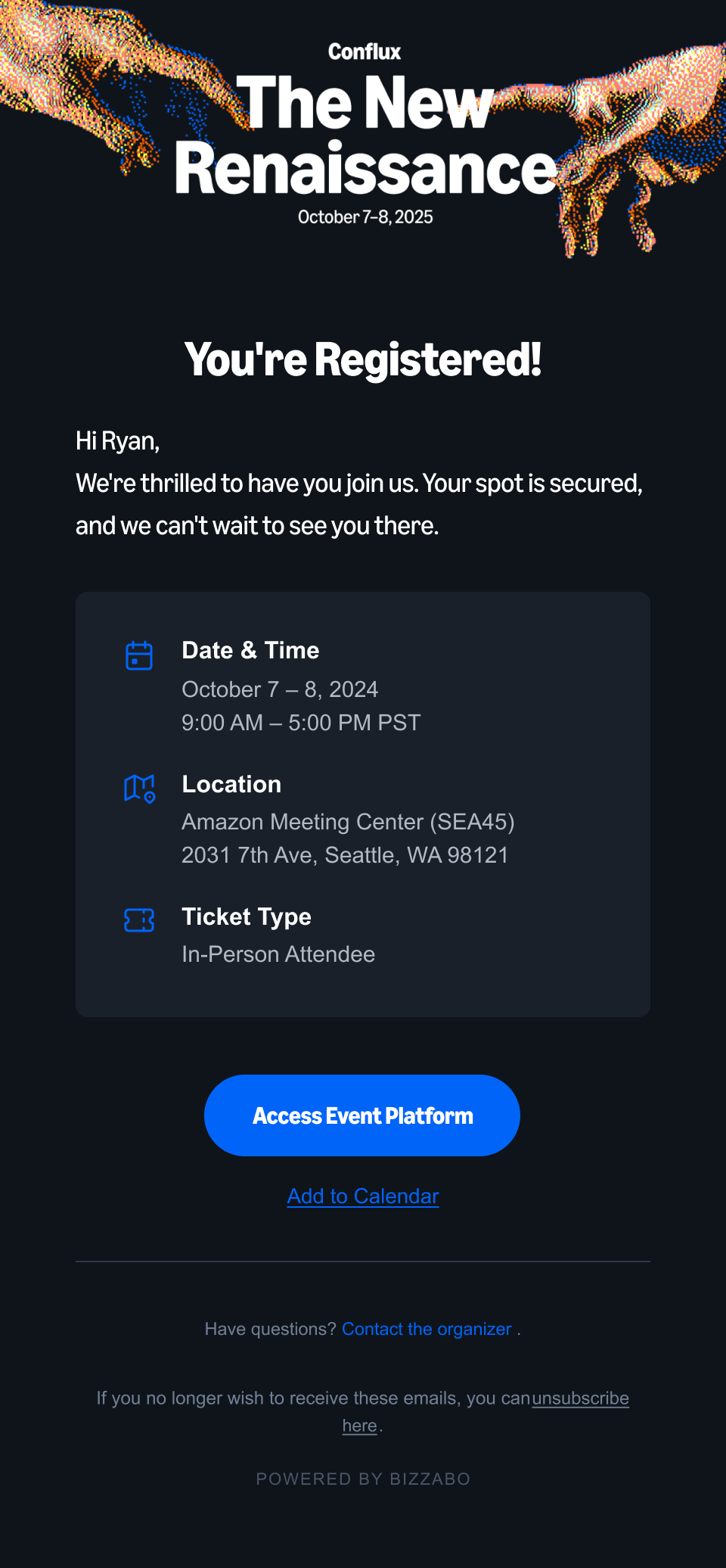
Bizzabo (live-event platform) digital experience and sample e-mail confirmation.
Digital session cards.
Dithering Tool & Portrait System
The Figma Make tool is published as a standalone artifact — input any image, output a dithered treatment in the Conflux visual language. Below it, the speaker intro sequence: each card was rendered individually in Blender using the recreated dithering effect, then composited in After Effects with animated typography. Every keynote speaker received a unique intro built from the same system.
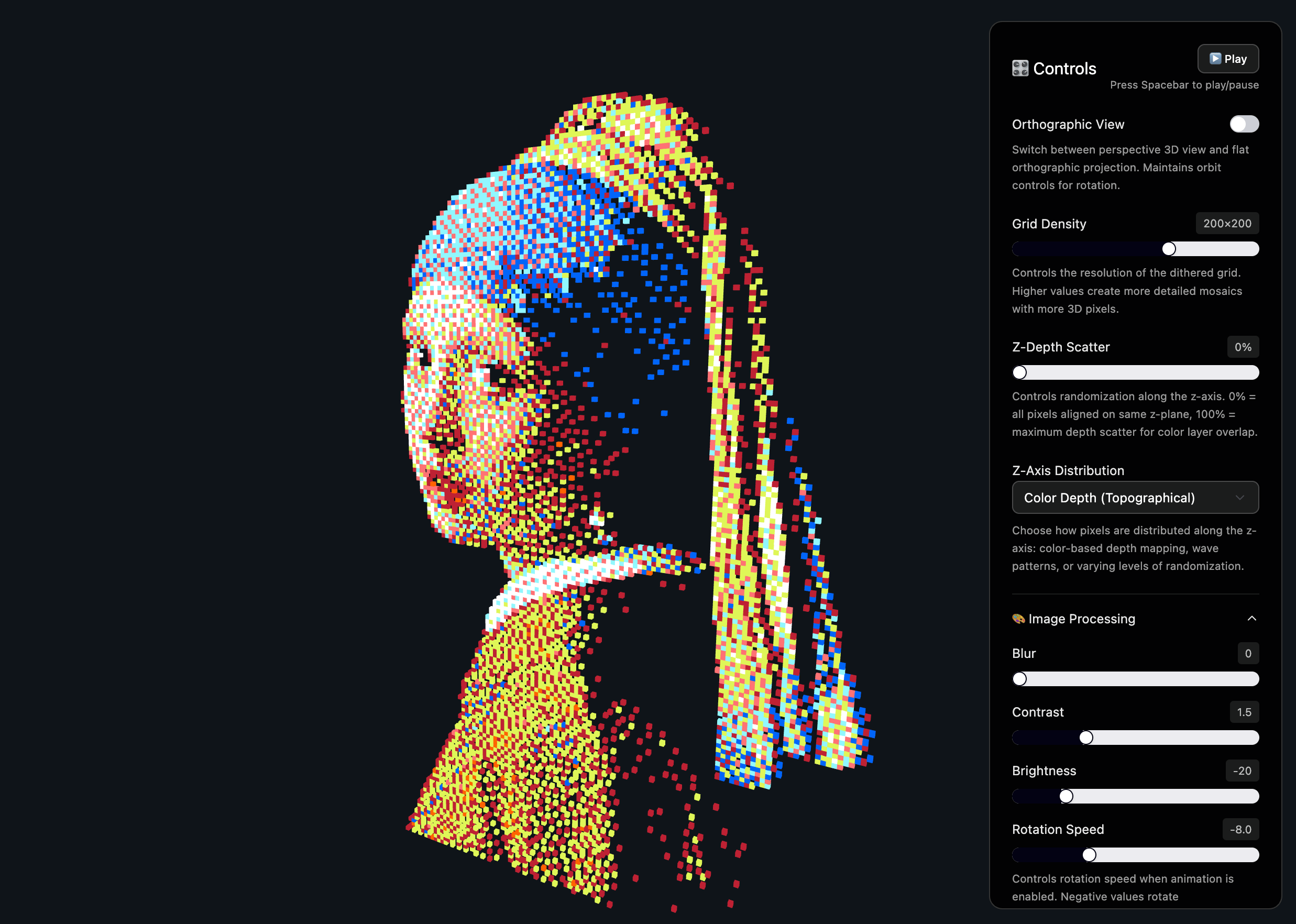
Dithering tool produced in figma make, based on work from Andreion De Castro. Click below for interactive version:
Launch Dithering Tool
Mainstage speaker introduction slide, rendered in Blender and After Effects
Environmental
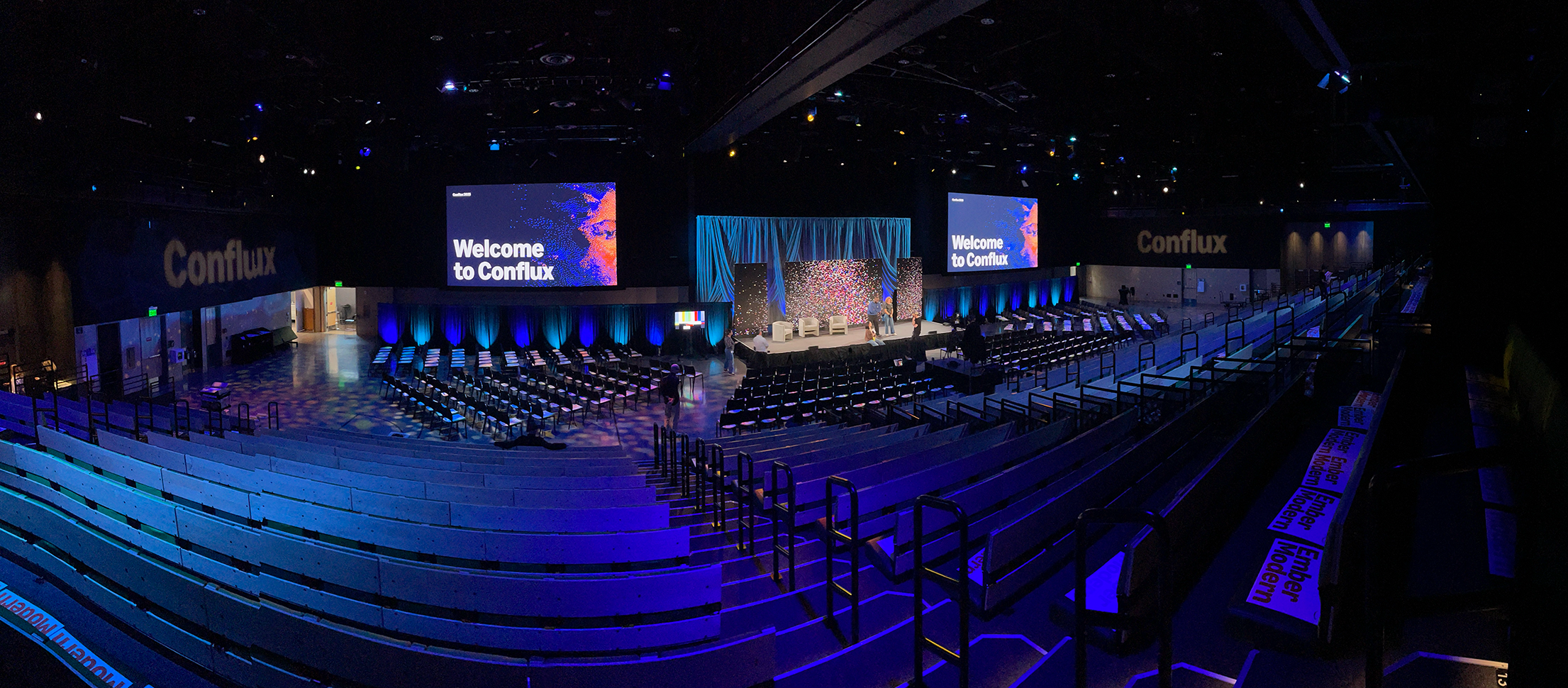
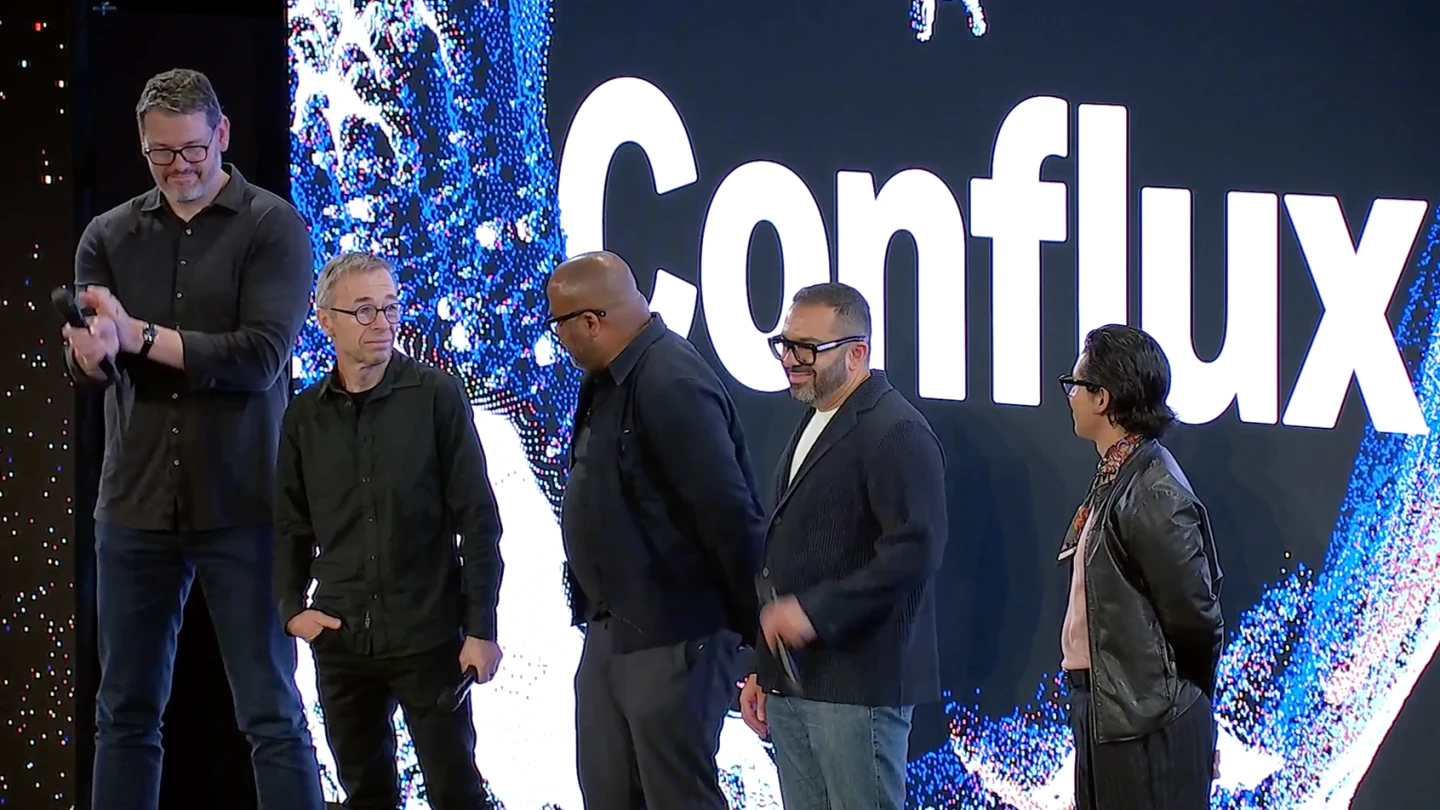
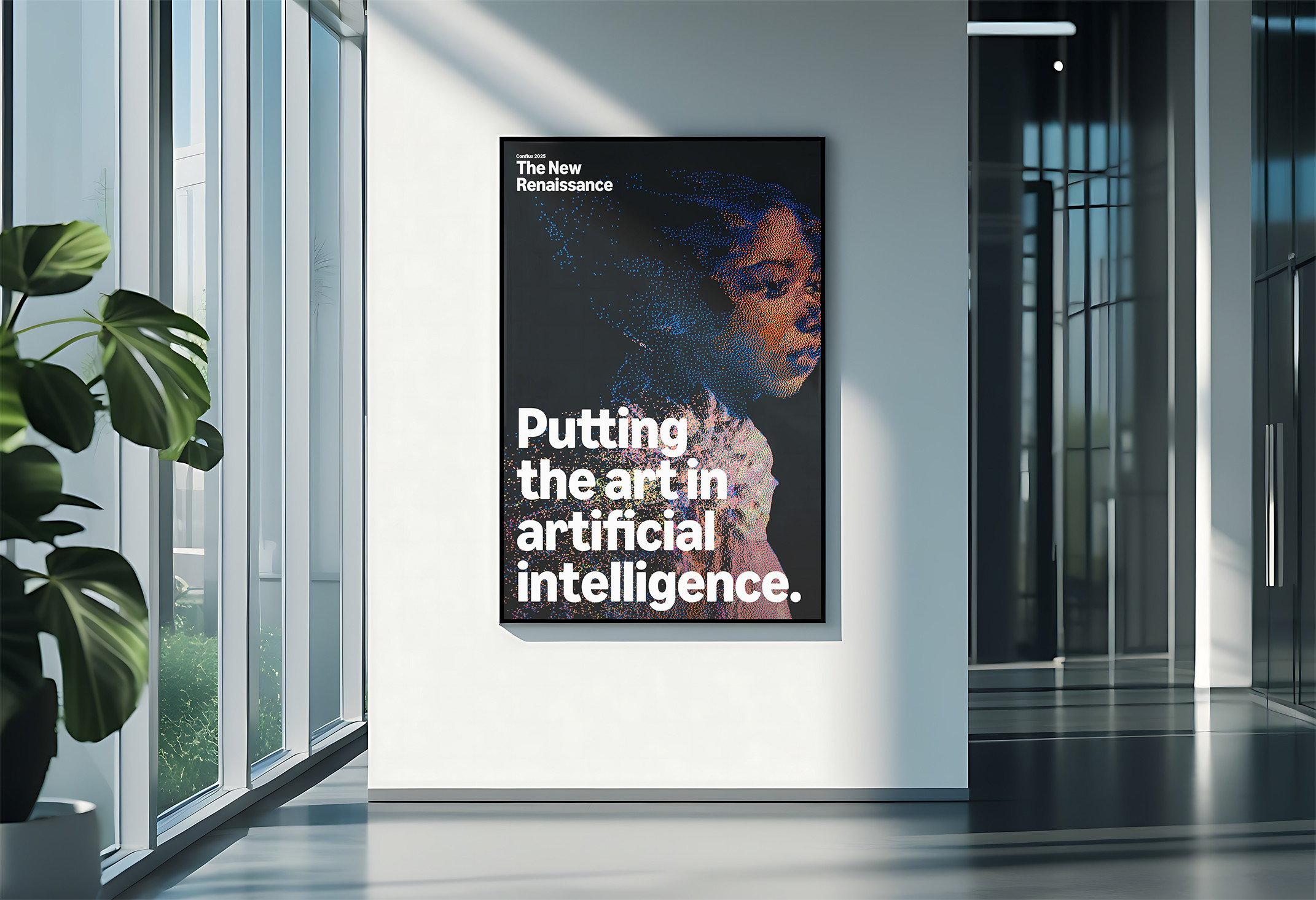
The South Lake Union meeting center served as the primary canvas — main stage graphics, large-format wall prints, window clings, wayfinding, and TV screens throughout the venue. The large-format prints were adapted from Andreion's delivered artwork: scaled, recolored, and corrected for brand consistency and output quality with production assistance from Funisok. I provided direction on stage motion graphics and corrections to the AV team.
Print & Swag
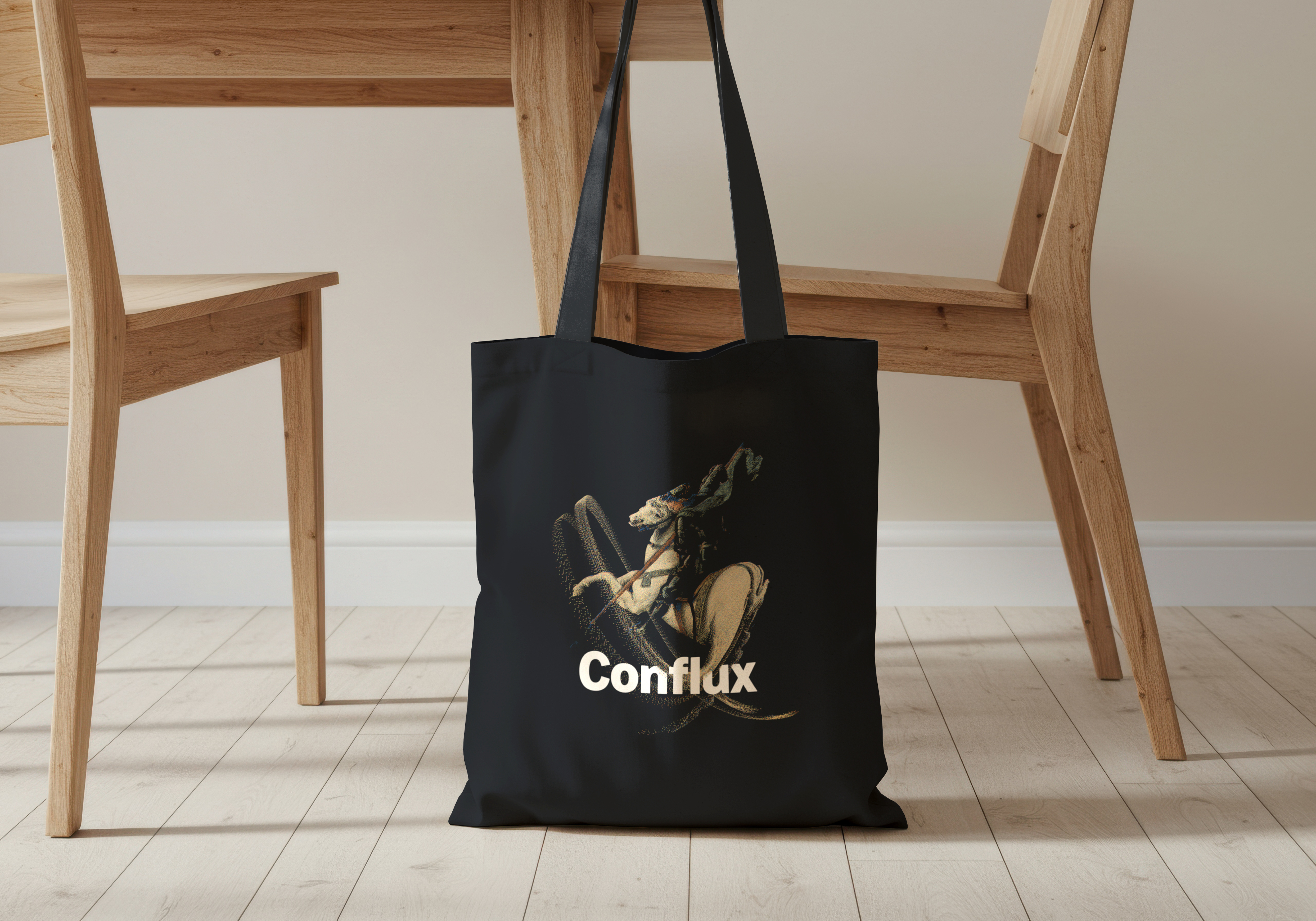
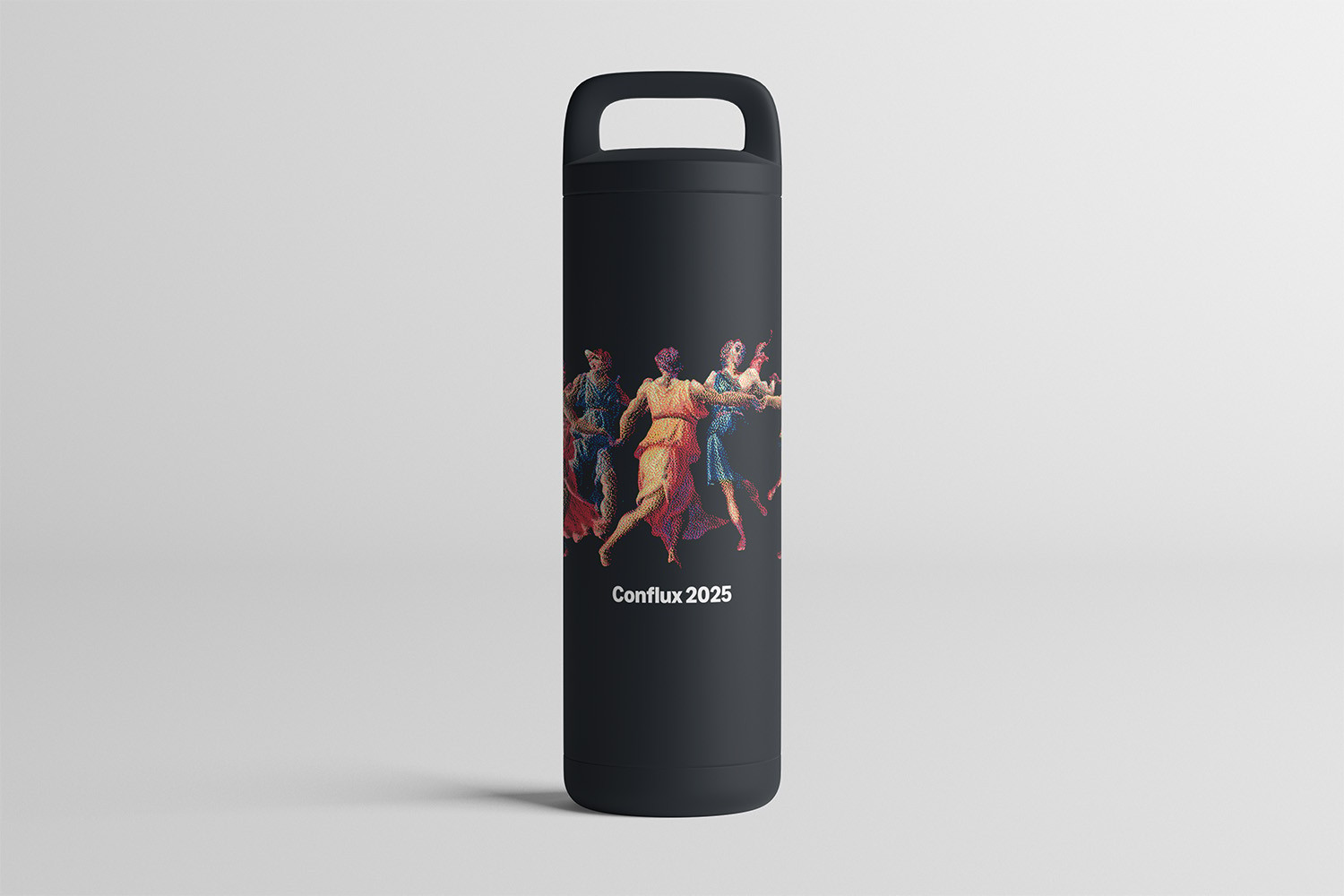
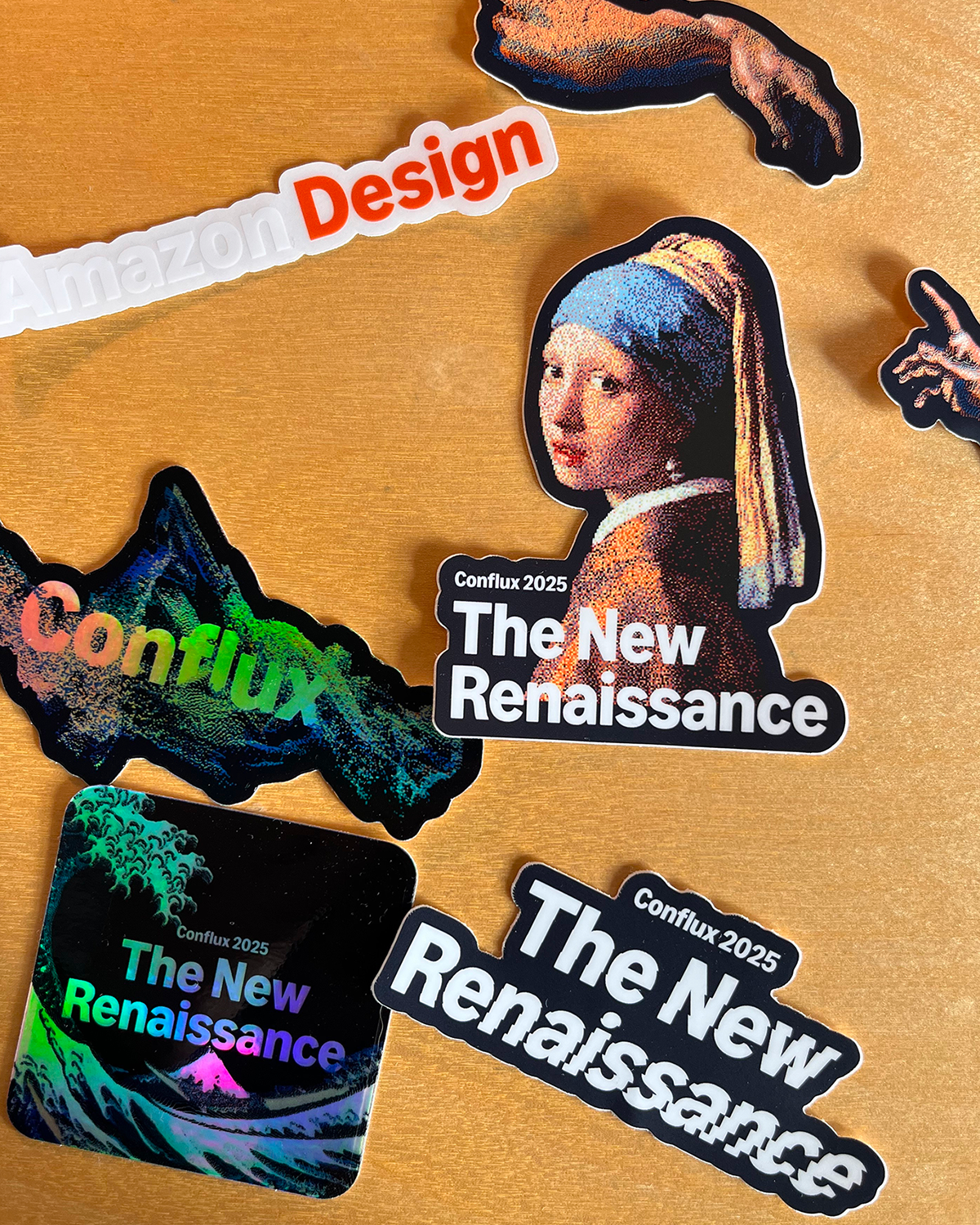
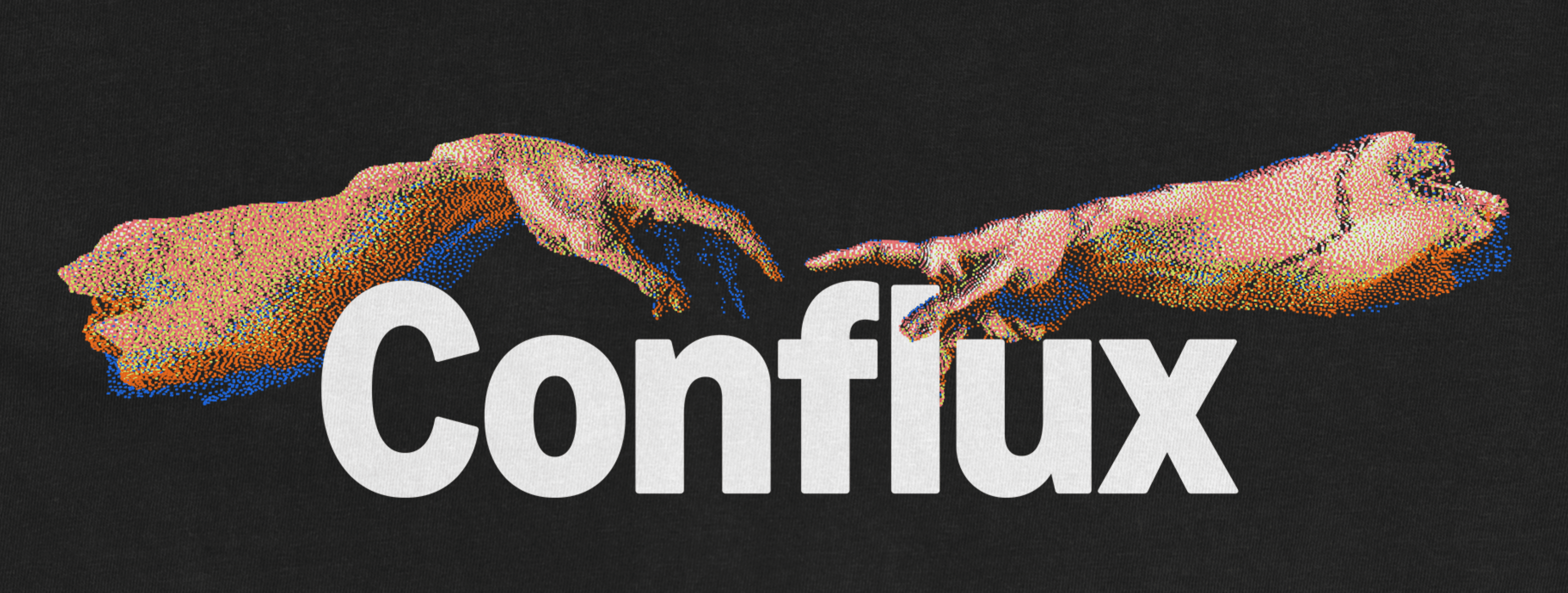
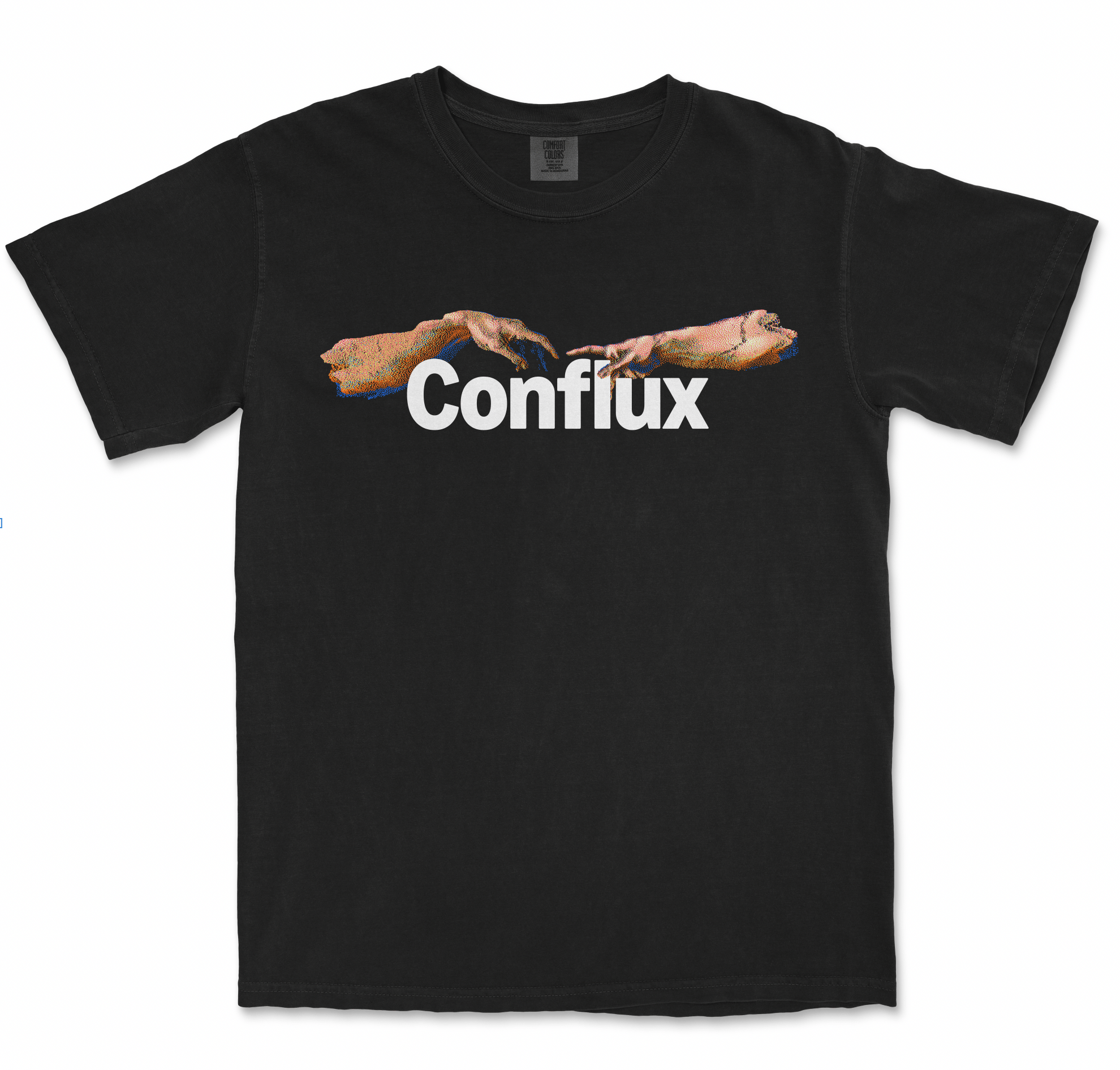
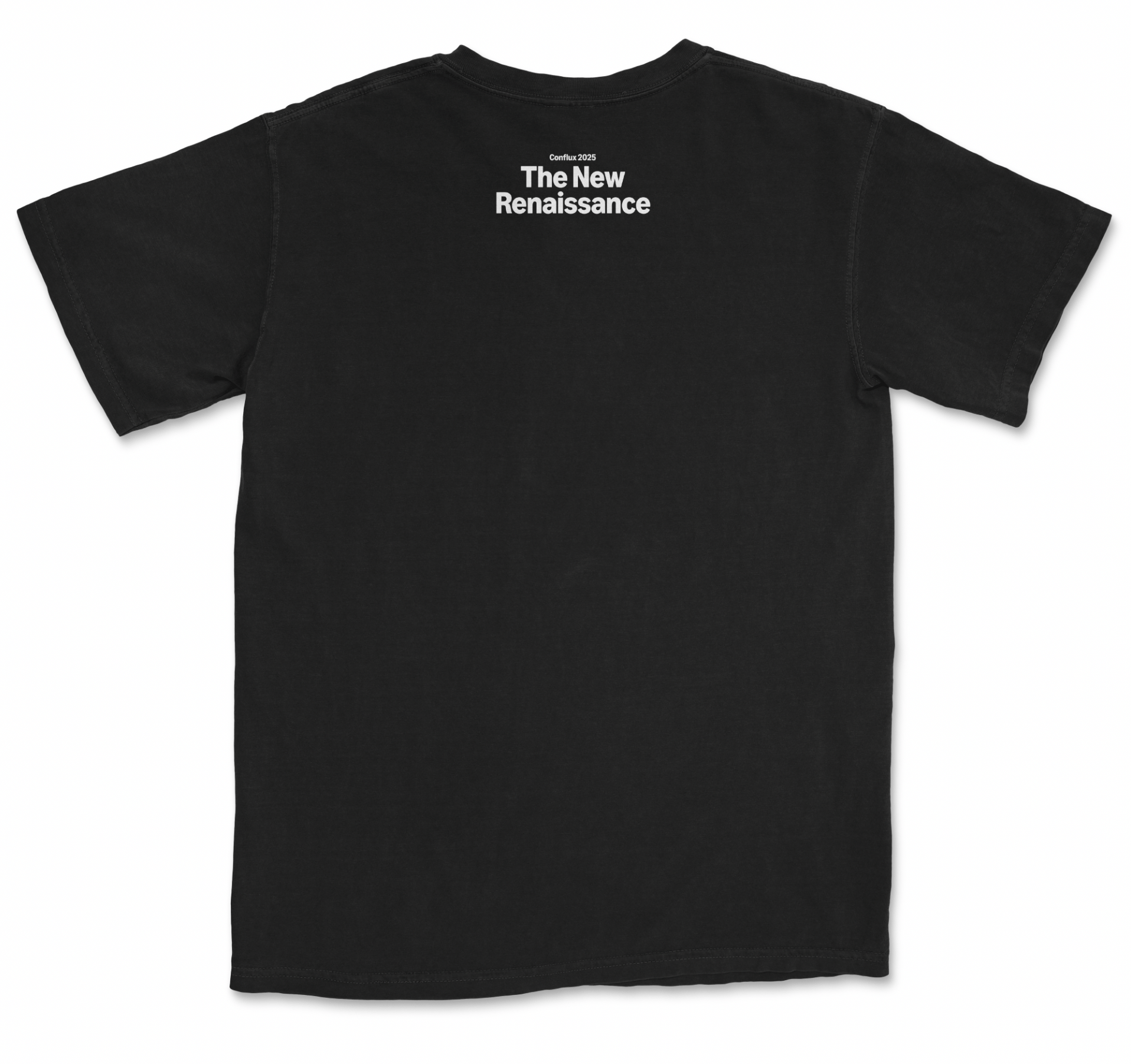
Attendee and speaker gifts spanned tote bags, die-cut stickers, custom Miir tumblers, and screen-printed shirts. The tote bags presented a production challenge as the dithered artwork required careful translation for CMYK transfer, with 2,000 units printed without a hard proof. Thankfully, they printed as intended. The volunteer shirts were a 5-color screen print, requiring significant artwork adaptation to translate a digital asset (anti-aliasing and all) to substrate correctly. Die-cut sticker designs were created end-to-end.
Impact & reflection
Conflux 2025 drew 1,600+ in-person attendees and 1,200+ on the live stream — exceeding prior year participation and marking a full return to in-person scale. Attendance extended beyond designers, with cross-discipline participation from across Amazon and Amazonians traveling from other states. Veteran attendees noted it was the best Conflux yet, citing a return to the community energy of pre-pandemic events.
The Blender recreation and the Figma Make tool started from the same constraint but served different purposes — one drove production of speaker portraits and stage graphics, the other put the visual language in the hands of anyone who needed it, no software knowledge required. Both were worth building. What I'd change is the starting point: working out tooling access with Andreion from the beginning, so that energy could go toward refinement rather than reconstruction.
Amazon Design →

Conflux 2025
Conflux is Amazon's flagship internal design conference — a multi-day gathering for 5,000+ designers. I served as lead designer and de facto creative director for the 2025 program: theme, visual system, and execution across every surface 1,600+ in-person attendees and 1,200+ streaming viewers would encounter.
January 2025 – October 2025
Brand Design
Creative Direction
Production
Context
Conflux is Amazon Design Excellence's (ADX) largest annual initiative — a multi-day internal conference connecting Amazon's global design community through thought leadership, professional development, and programming. I contributed to creative direction and led execution for the 2025 program. Amazon’s Cross-channel Marketing (XCM) brand team led brand development under ADX direction; commissioned artist Andreion De Castro's interpretive AI style defined the theme; and Funisok assisted with production design. This was Conflux's return to full in-person scale since pre-pandemic at Amazon's South Lake Union meeting center, and expectations from the design community reflected it. The timeline was compressed: a new program manager onboarded in February under new ADX leadership, and artwork approval cycles absorbed a significant share of the production window.
Opportunity
Three problems shaped the work:
Translation. Community input from a 5,000+ designer survey needed to become a theme capable of organizing a multi-day conference — content, speakers, and the story Conflux would tell about itself.
Execution gap. The theme was built around a commissioned artist whose dithering technique defined the visual language — but his tool couldn't be licensed at scale. Without a reproduction of that aesthetic, the theme would exist only in the pieces he delivered.
Scale of surface. Conflux 2025 lived across digital, environmental, motion, print, and international distribution — thirty-plus distinct surface types, all needing to read as the same event.
Process
Translating community input into a theme and framework
A community-wide survey of designers surfaced what was on people's minds and the results informed a clear directive from ADX leadership: create a theme that positioned designers as in control of the narrative around AI, and make it beautiful. Turning that into something a multi-day conference could be built around required a shape. Our team developed the three-subject framework: Humanity, Design/Craft, and Emerging Tech/AI. This framework organized programming, speaker selection, and the pitch to senior and VP stakeholders, and carried through into the brand system XCM developed around it.
Recreating the dithering technique
Andreion's dithering aesthetic was the theme's visual language, but licensing his tool at scale wasn't in the budget. I recreated the effect in Blender using geometry nodes and Python scripts, then built a Figma Make tool that applied the treatment to any input image. The recreation drove keynote speaker portraits, introduction cards, and stage graphics — and helped an external motion partner develop their direction for the conference intro. A production constraint became infrastructure that extended the theme across the event.
Leading execution across surfaces and teams
With the framework set and the dithering infrastructure in place, the work shifted to thirty-plus surface types — digital, environmental, print, motion, swag, and international watch party kits. Art direction ran simultaneously across ADX, XCM, Funisok, and external motion partners. The goal across all of it: every surface reading as the same event.
Final artwork was delivered as high resolution RGB png images. Each work was processed to account for perceived color across a variety of surfaces, including a reinterpretation of the anti-aliased pixels pictured above.
The Work
The work spans the full arc of Conflux 2025. Every surface was designed or art-directed to read as a single coherent event.
Digital Experience
Promotional video for internal lead-up marketing.
Bizzabo (live-event platform) digital experience and sample e-mail confirmation.
Digital session cards.
Dithering Tool & Portrait System
The Figma Make tool is published as a standalone artifact — input any image, output a dithered treatment in the Conflux visual language. Below it, the speaker intro sequence: each card was rendered individually in Blender using the recreated dithering effect, then composited in After Effects with animated typography. Every keynote speaker received a unique intro built from the same system.
Dithering tool produced in figma make, based on work from Andreion De Castro. Click below for interactive version:
Launch Dithering Tool
Mainstage speaker introduction slide, rendered in Blender and After Effects
Environmental
The South Lake Union meeting center served as the primary canvas — main stage graphics, large-format wall prints, window clings, wayfinding, and TV screens throughout the venue. The large-format prints were adapted from Andreion's delivered artwork: scaled, recolored, and corrected for brand consistency and output quality with production assistance from Funisok. I provided direction on stage motion graphics and corrections to the AV team.
Print & Swag
Attendee and speaker gifts spanned tote bags, die-cut stickers, custom Miir tumblers, and screen-printed shirts. The tote bags presented a production challenge as the dithered artwork required careful translation for CMYK transfer, with 2,000 units printed without a hard proof. Thankfully, they printed as intended. The volunteer shirts were a 5-color screen print, requiring significant artwork adaptation to translate a digital asset (anti-aliasing and all) to substrate correctly. Die-cut sticker designs were created end-to-end.
Impact & reflection
3000+
In-person/streaming attendees
4.2/5
Satisfaction score, +0.3 YoY
+18%
Attendance rate YoY
Conflux 2025 drew 1,600+ in-person attendees and 1,200+ on the live stream — exceeding prior year participation and marking a full return to in-person scale. Attendance extended beyond designers, with cross-discipline participation from across Amazon and Amazonians traveling from other states. Veteran attendees noted it was the best Conflux yet, citing a return to the community energy of pre-pandemic events.
The Blender recreation and the Figma Make tool started from the same constraint but served different purposes — one drove production of speaker portraits and stage graphics, the other put the visual language in the hands of anyone who needed it, no software knowledge required. Both were worth building. What I'd change is the starting point: working out tooling access with Andreion from the beginning, so that energy could go toward refinement rather than reconstruction.
Amazon Design →

Conflux 2025
Conflux is Amazon's flagship internal design conference — a multi-day gathering for 5,000+ designers. I served as lead designer and de facto creative director for the 2025 program: theme, visual system, and execution across every surface 1,600+ in-person attendees and 1,200+ streaming viewers would encounter.
January 2025 – October 2025
Brand Design
Creative Direction
Production
Context
Conflux is Amazon Design Excellence's (ADX) largest annual initiative — a multi-day internal conference connecting Amazon's global design community through thought leadership, professional development, and programming. I contributed to creative direction and led execution for the 2025 program. Amazon’s Cross-channel Marketing (XCM) brand team led brand development under ADX direction; commissioned artist Andreion De Castro's interpretive AI style defined the theme; and Funisok assisted with production design. This was Conflux's return to full in-person scale since pre-pandemic at Amazon's South Lake Union meeting center, and expectations from the design community reflected it. The timeline was compressed: a new program manager onboarded in February under new ADX leadership, and artwork approval cycles absorbed a significant share of the production window.
Opportunity
Three problems shaped the work:
Translation. Community input from a 5,000+ designer survey needed to become a theme capable of organizing a multi-day conference — content, speakers, and the story Conflux would tell about itself.
Execution gap. The theme was built around a commissioned artist whose dithering technique defined the visual language — but his tool couldn't be licensed at scale. Without a reproduction of that aesthetic, the theme would exist only in the pieces he delivered.
Scale of surface. Conflux 2025 lived across digital, environmental, motion, print, and international distribution — thirty-plus distinct surface types, all needing to read as the same event.
Process
Translating community input into a theme and framework
A community-wide survey of designers surfaced what was on people's minds and the results informed a clear directive from ADX leadership: create a theme that positioned designers as in control of the narrative around AI, and make it beautiful. Turning that into something a multi-day conference could be built around required a shape. Our team developed the three-subject framework: Humanity, Design/Craft, and Emerging Tech/AI. This framework organized programming, speaker selection, and the pitch to senior and VP stakeholders, and carried through into the brand system XCM developed around it.
Recreating the dithering technique
Andreion's dithering aesthetic was the theme's visual language, but licensing his tool at scale wasn't in the budget. I recreated the effect in Blender using geometry nodes and Python scripts, then built a Figma Make tool that applied the treatment to any input image. The recreation drove keynote speaker portraits, introduction cards, and stage graphics — and helped an external motion partner develop their direction for the conference intro. A production constraint became infrastructure that extended the theme across the event.
Leading execution across surfaces and teams
With the framework set and the dithering infrastructure in place, the work shifted to thirty-plus surface types — digital, environmental, print, motion, swag, and international watch party kits. Art direction ran simultaneously across ADX, XCM, Funisok, and external motion partners. The goal across all of it: every surface reading as the same event.
Final artwork was delivered as high resolution RGB png images. Each work was processed to account for perceived color across a variety of surfaces, including a reinterpretation of the anti-aliased pixels pictured above.
The Work
The work spans the full arc of Conflux 2025. Every surface was designed or art-directed to read as a single coherent event.
Digital Experience
Promotional video for internal lead-up marketing.
Bizzabo (live-event platform) digital experience and sample e-mail confirmation.
Digital session cards.
Dithering Tool & Portrait System
The Figma Make tool is published as a standalone artifact — input any image, output a dithered treatment in the Conflux visual language. Below it, the speaker intro sequence: each card was rendered individually in Blender using the recreated dithering effect, then composited in After Effects with animated typography. Every keynote speaker received a unique intro built from the same system.
Dithering tool produced in figma make, based on work from Andreion De Castro. Click below for interactive version:
Launch Dithering Tool
Mainstage speaker introduction slide, rendered in Blender and After Effects
Environmental
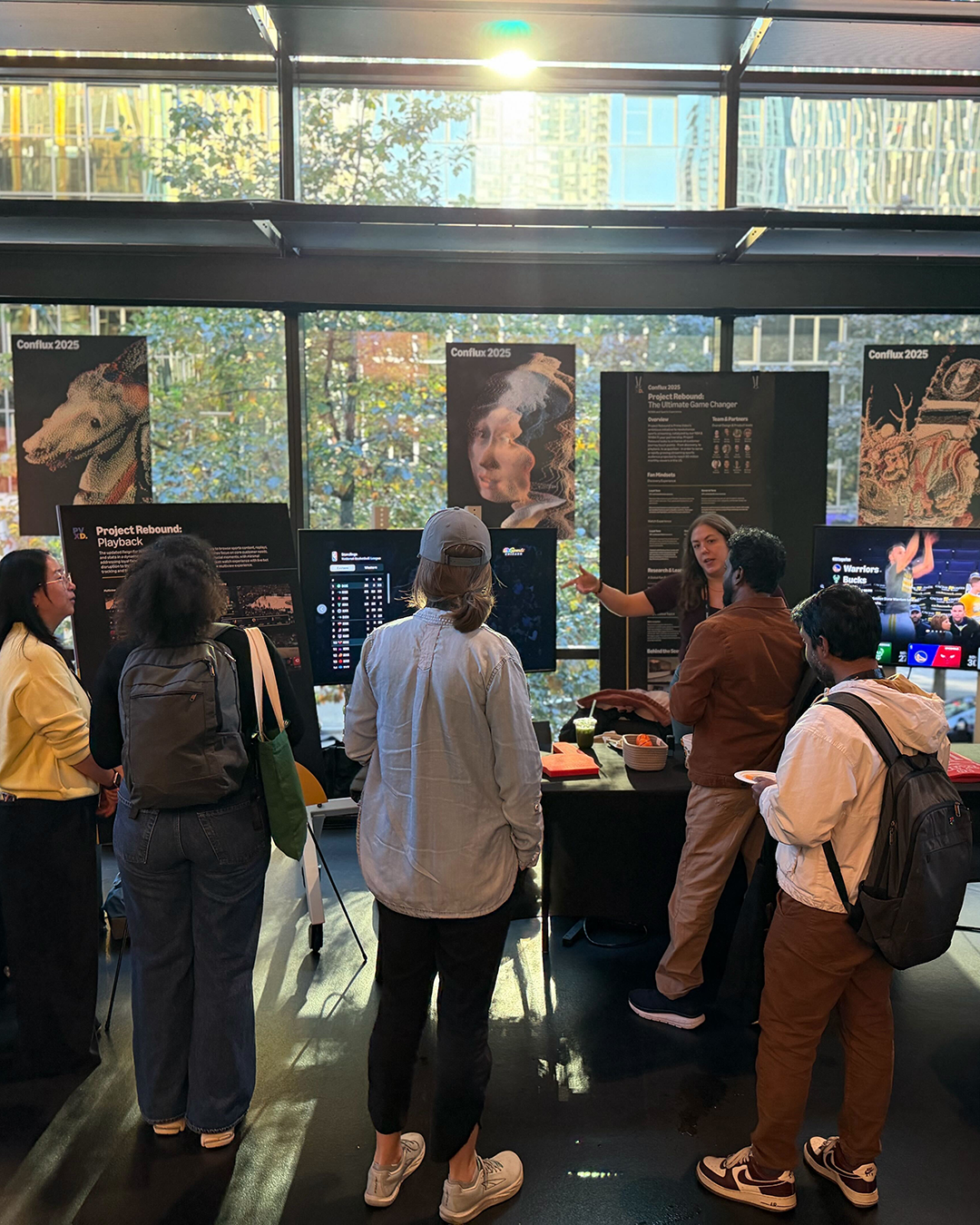
The South Lake Union meeting center served as the primary canvas — main stage graphics, large-format wall prints, window clings, wayfinding, and TV screens throughout the venue. The large-format prints were adapted from Andreion's delivered artwork: scaled, recolored, and corrected for brand consistency and output quality with production assistance from Funisok. I provided direction on stage motion graphics and corrections to the AV team.
Print & Swag
Attendee and speaker gifts spanned tote bags, die-cut stickers, custom Miir tumblers, and screen-printed shirts. The tote bags presented a production challenge as the dithered artwork required careful translation for CMYK transfer, with 2,000 units printed without a hard proof. Thankfully, they printed as intended. The volunteer shirts were a 5-color screen print, requiring significant artwork adaptation to translate a digital asset (anti-aliasing and all) to substrate correctly. Die-cut sticker designs were created end-to-end.
Impact & reflection
3000+
In-person/streaming attendees
4.2/5
Satisfaction score, +0.3 YoY
+18%
Attendance rate YoY
Conflux 2025 drew 1,600+ in-person attendees and 1,200+ on the live stream — exceeding prior year participation and marking a full return to in-person scale. Attendance extended beyond designers, with cross-discipline participation from across Amazon and Amazonians traveling from other states. Veteran attendees noted it was the best Conflux yet, citing a return to the community energy of pre-pandemic events.
The Blender recreation and the Figma Make tool started from the same constraint but served different purposes — one drove production of speaker portraits and stage graphics, the other put the visual language in the hands of anyone who needed it, no software knowledge required. Both were worth building. What I'd change is the starting point: working out tooling access with Andreion from the beginning, so that energy could go toward refinement rather than reconstruction.